
Talent, Education & Research
Academia, education and research driving growth
Access to talent, research and strong innovation environments is a key advantage for growth and investment. In Helsingborg, close collaboration between industry, education providers and the public sector ensures that skills development is aligned with real business needs.

Strategic direction with practical delivery
Helsingborg’s strength lies in how skills development and availability are organised as a connected system. Close dialogue with businesses, clear planning and regional collaboration help training keep pace with business needs. At the same time, social sustainability is an integral part of the city’s growth strategy. In the face of demographic challenges, Helsingborg actively works to bring more people into the labour market. Through targeted initiatives, reskilling, fast-track routes and tailored training—such as commissioned programmes with Lund University—Helsingborg strengthens companies’ access to talent and its own long-term competitiveness.
Did you know…
Lund University is Sweden’s top-ranked university in the QS World Rankings 2026.

Lund University, Campus Helsingborg
In Helsingborg, businesses have direct access to one of the world’s highest-ranked universities. Lund University was ranked number one in the world for sustainability in 2025—the highest position ever achieved by a Nordic university. It has around 40,000 students and 8,000 researchers. For businesses, this means access to leading research and talent, and the opportunity to turn new knowledge into practical value.
Campus Helsingborg, established in 2000, is now a dynamic environment with around 4,000 Swedish and international students, several international research centres and a broad range of programmes.
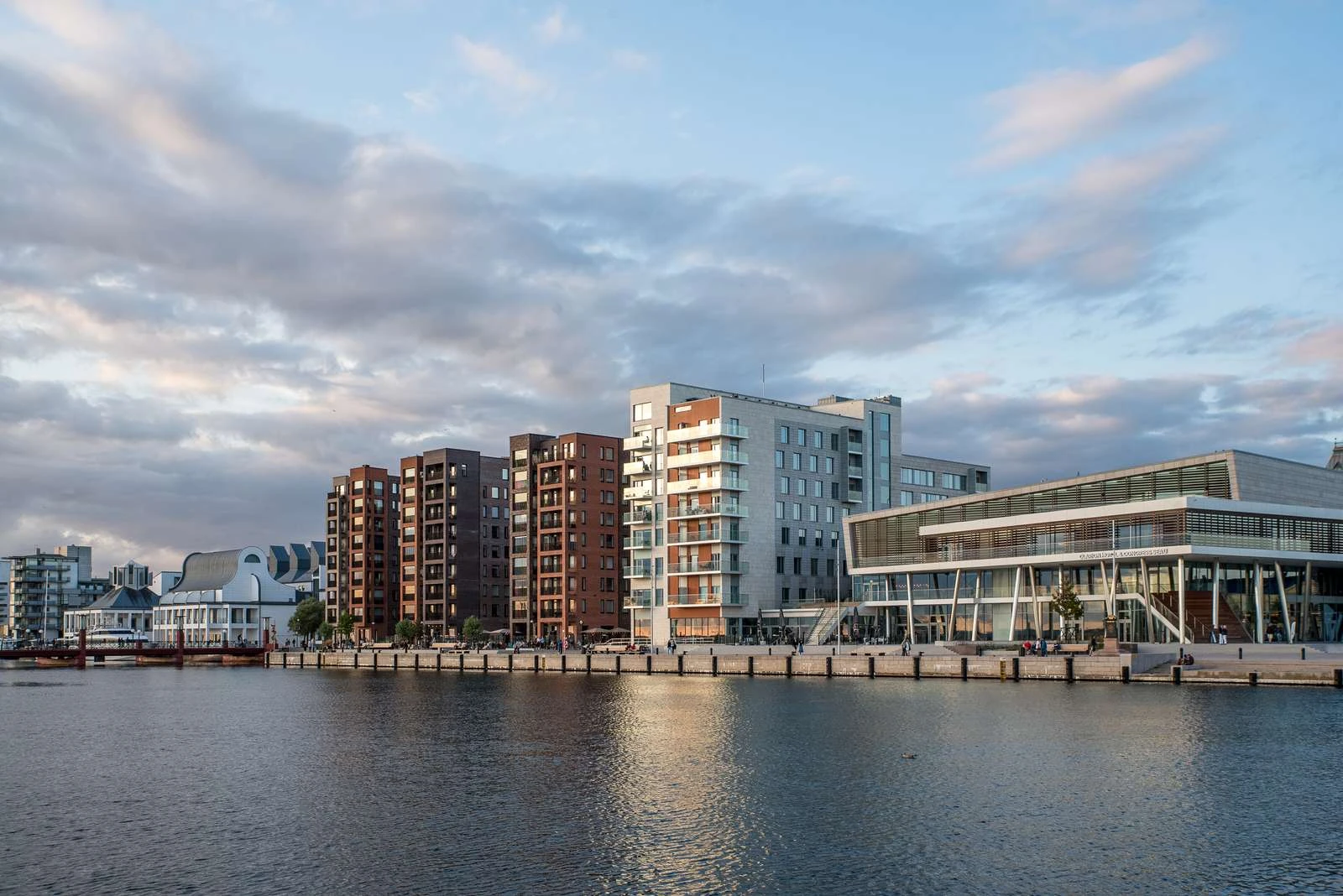
Located in Oceanhamnen, at the heart of Helsingborg Innovation District, it offers education and research closely aligned with market needs.
The City of Helsingborg and Lund University have a strategic partnership to strengthen Campus Helsingborg and further establish Helsingborg as a recognised university and research city. The focus is on interdisciplinary research, high-quality education, faster innovation, an attractive student environment and closer collaboration between academia, business and the public sector.
Research with business impact
Research based at Campus Helsingborg has clear links to the city’s current and emerging strengths. This creates strong conditions for development and specialist expertise for local businesses. The REAL research platform—Centre for Retail and Logistics—gives businesses direct access to research and innovation in retail and logistics. With a focus on major societal challenges such as digitalisation, the climate crisis and the need for greater resilience, REAL develops solutions to the challenges facing the sector. Projects focus on areas such as circular retail, e-commerce, packaging solutions, traceability and material efficiency, contributing to regional and national development in retail and logistics.
The LUPREP research centre (Lund University Centre for Preparedness and Resilience) is Lund University’s new centre for total defence, bringing together leading expertise on Campus Helsingborg. Its aim is to strengthen education, research and collaboration in total defence and preparedness. The centre hosts several doctoral positions in defence-related research, along with two master’s programmes focused on civil preparedness and security policy.Lund University has invested a total of SEK 68 million in LUPREP. Through LUPREP, companies gain access to current research, doctoral programmes and education that can be applied in new services, ways of working and solutions that strengthen the resilience of both society and business. Examples of projects include the use of drones in healthcare crisis response, and public communication and awareness campaigns related to defence and preparedness.
Helsingborg Safety Hub complements the wider innovation ecosystem as an advanced research infrastructure for safety and security. It brings together expertise in areas such as fire safety engineering, transport systems and epidemiological research. Researchers and partners use modern technologies such as simulation, virtual reality and data analysis.
The City of Helsingborg strengthens research-led collaboration through its R&D Fund (FoU-fonden) and targeted research investments, allocating funding each year to projects at Campus Helsingborg.
Networks
Networks like Campus Vänner connect Campus Helsingborg students with businesses through mentoring, scholarships, networking events and collaboration. This gives companies early contact with future employees and the opportunity to attract talent while they’re still studying. Helsingborg International Connections (HIC) helps families of international professionals get settled in Helsingborg by building networks, hosting events and offering practical support.
Coordinated education pathways
In Helsingborg, education works as a coordinated system, supporting interest in science and technology from an early age and carrying through to higher education and vocational training aligned with business needs. Close collaboration between businesses, education providers and the public sector shapes programmes around real skills demand. This gives companies flexible, targeted and scalable access to the skills they need—supporting existing businesses, new investment and long-term growth.
Science Center Helsingborg
Science Center Helsingborg lets children and young people explore science, technology and innovation interactively. By sparking early interest in STEM—science, technology, engineering and maths—Science Center contributes towards building the future skills base for local businesses. Science Center forms part of a broader collaboration between Lund University, the City of Helsingborg, Wihlborgs, Navet Analytics and Helsingborgs Handelsförening, with active involvement from the business community. Together, these partners take a more coordinated approach to STEM across the education system. This helps broaden the future talent pool in tech and life sciences—areas with strong growth potential and close links to the city’s key strengths.
Building skills businesses need through adult education and vocational training
Helsingborg is at the forefront of adult education and higher vocational training. Through close collaboration between the municipalities in the Family Helsingborg network, a broad and flexible range of programmes is available across the region, with joint admissions to vocational courses and a clear link to labour market needs. This gives businesses access to a larger, more readily available skills pool, and better opportunities to upskill existing staff, reskill when needs change and quickly match candidates to hard-to-fill roles.

Higher vocational education is central to local skills development
Higher vocational training plays a central role in developing the skills businesses need. Many programmes in Helsingborg are designed with input from industry and through the city’s skills planning. Through the YH-Collection network, education providers across the Family Helsingborg region work together, helping to maintain high quality, strong alignment with business needs and approval rates above the regional and national average.
Adult education also plays a key role in making full use of the available workforce. Targeted initiatives and tailored training create pathways into skilled roles for people currently outside the labour market—strengthening both companies’ recruitment base and the city’s social sustainability.
Secondary school education with options
Helsingborg offers a wide range of upper secondary schools, both municipal and independent, with vocational as well as academic programmes. Apprenticeship routes are also available, combining study with work placements—strengthening the link between education and working life from an early stage.
Upper secondary schools work closely with businesses through programme advisory boards and workplace-based learning. This helps ensure that courses continue to reflect current labour market needs, and skills development for future needs is built in from the ground up.
Fast track to needs-based training
Helsingborg plans training and skills development in close partnership with businesses and education providers. Together, they build a clear picture of future demand, recruitment challenges and the training and reskilling required. This makes it easier to move from an identifying need to starting training, so companies can find the right skills in time and plan with greater confidence.
Manufacturing is Helsingborg’s second-largest sector, with a turnover of almost SEK 18 billion. The city is developing an industrial hub that brings together companies, training providers and other partners to align training with industry needs—so businesses can access the skills they need while supporting jobs, competitiveness and sustainable growth.